Topanga.io
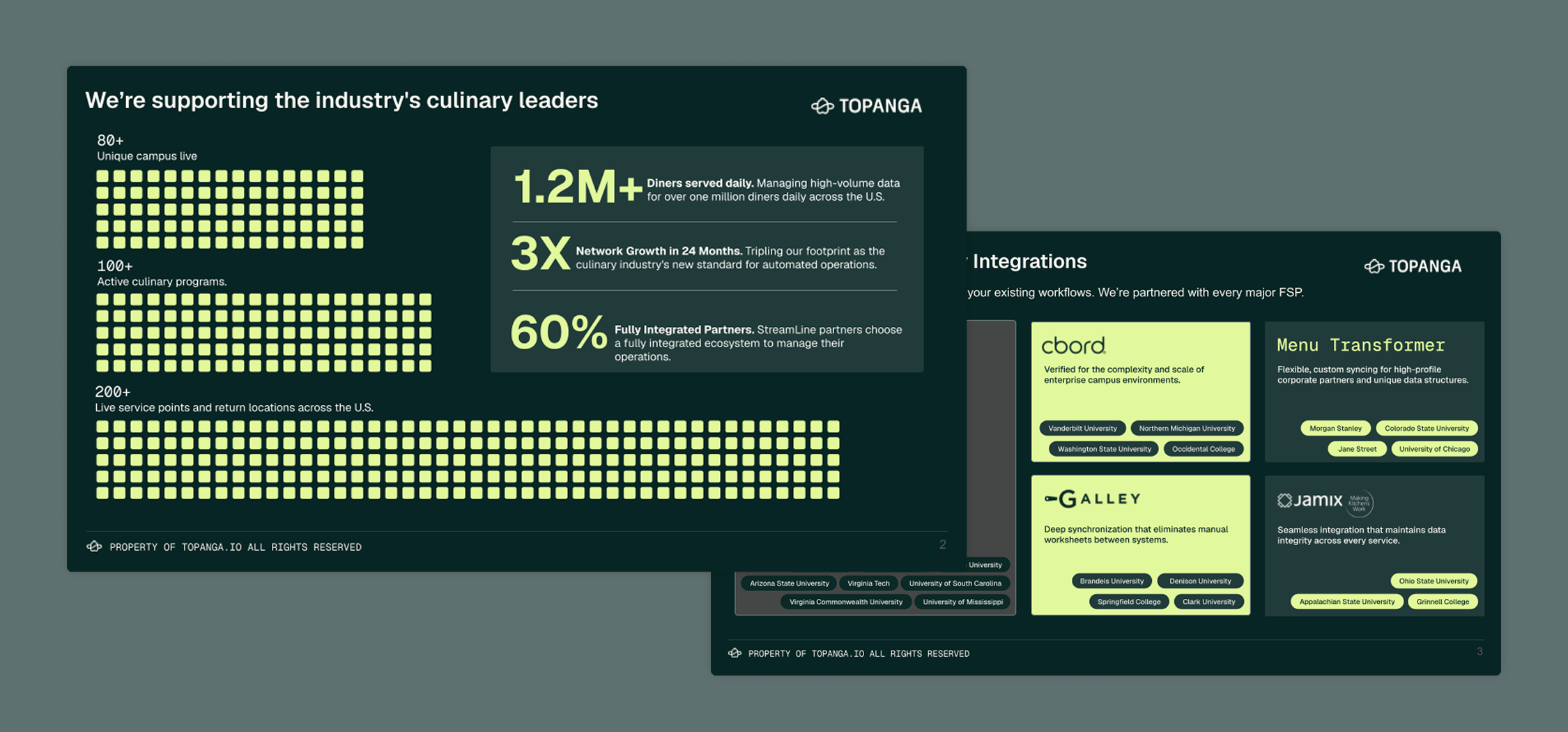
One brand family, two audiences. A B2C refresh for ReusePass, the student-facing side, and a B2B implementation experience plus sales deck for StreamLine.
Date: 2026
Type: Brand system / Interactive UI/UX / Sales tools
Why: Topanga's two products talk to people who never meet. A student grabbing lunch and a dining director signing a contract need the same brand to do opposite things.
How: Shared palette and type, split by tone. Persona switching instead of four journeys at once. One brand that holds at a foot away and across a room.
Who: Loren Lam (Design) / Hussain Ali (Frontend) / Jenny Nova (Product Marketing)
Topanga builds waste tracking for commercial kitchens.
StreamLine pairs smart scales with software that shows a kitchen what it's throwing away, then turns that into production forecasts. ReusePass is the other end: reusable to-go containers students check out and return with a QR code. Campuses, hospitals, senior living.
Two products, two audiences. A dining director evaluating a contract and a student picking up lunch need the same brand to do different things.
Both sides had the same constraint. Nothing could depend on me. Campus staff make their own signage. Topanga's team makes their own decks and emails. None of them are designers, and none of them will troubleshoot a broken layout.
I worked on both.
O1 / B2CReusePass
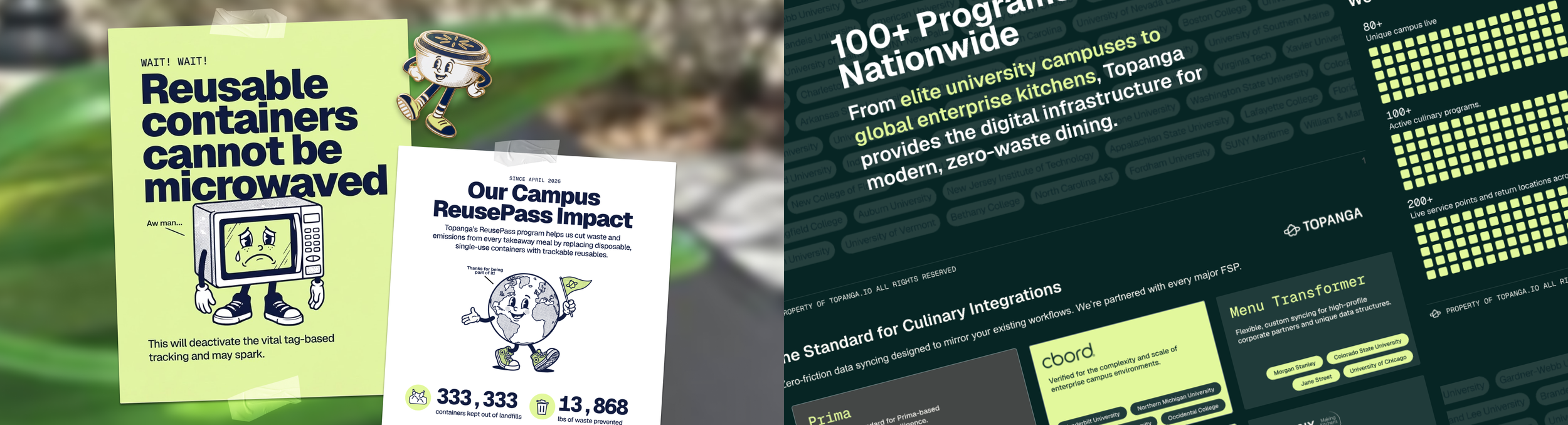
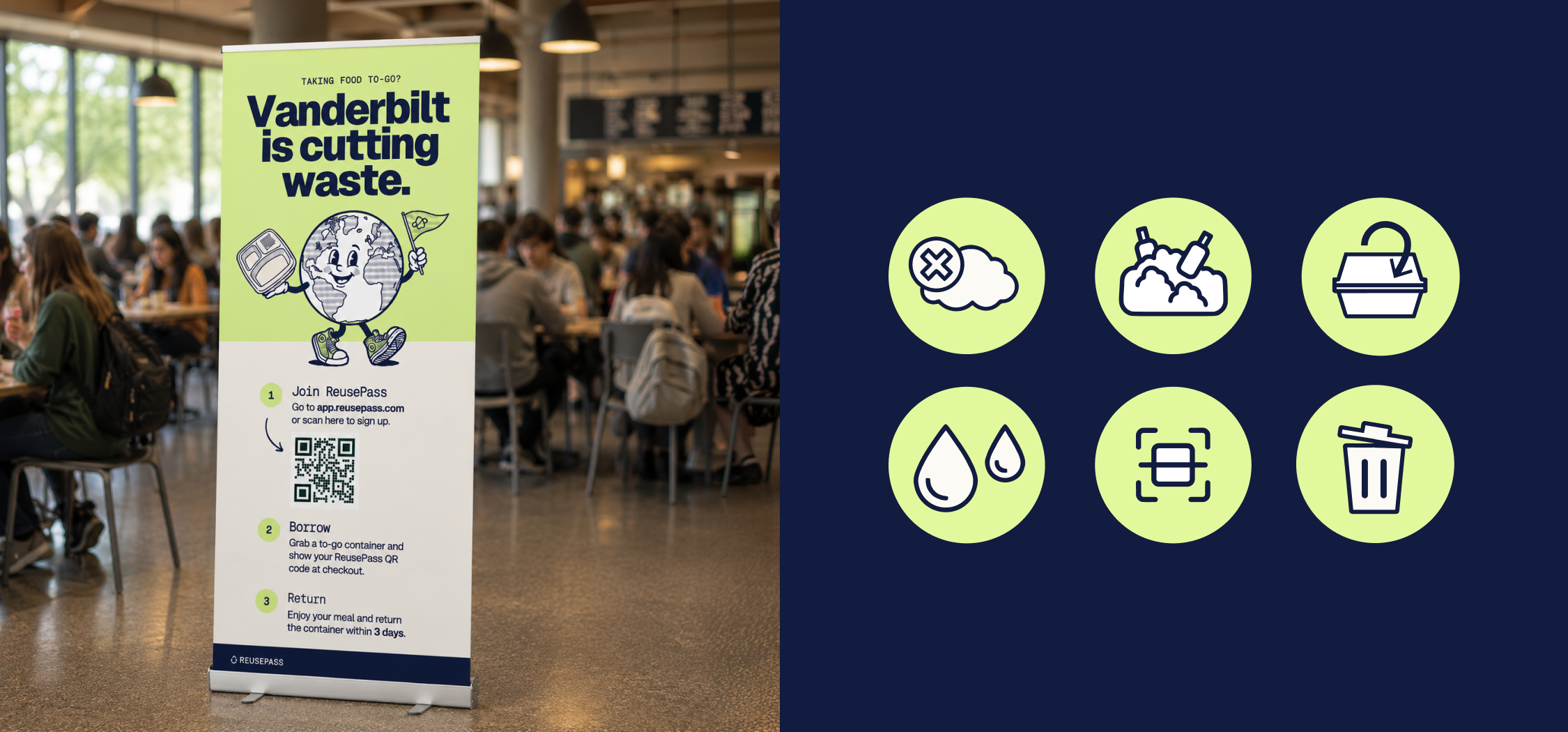
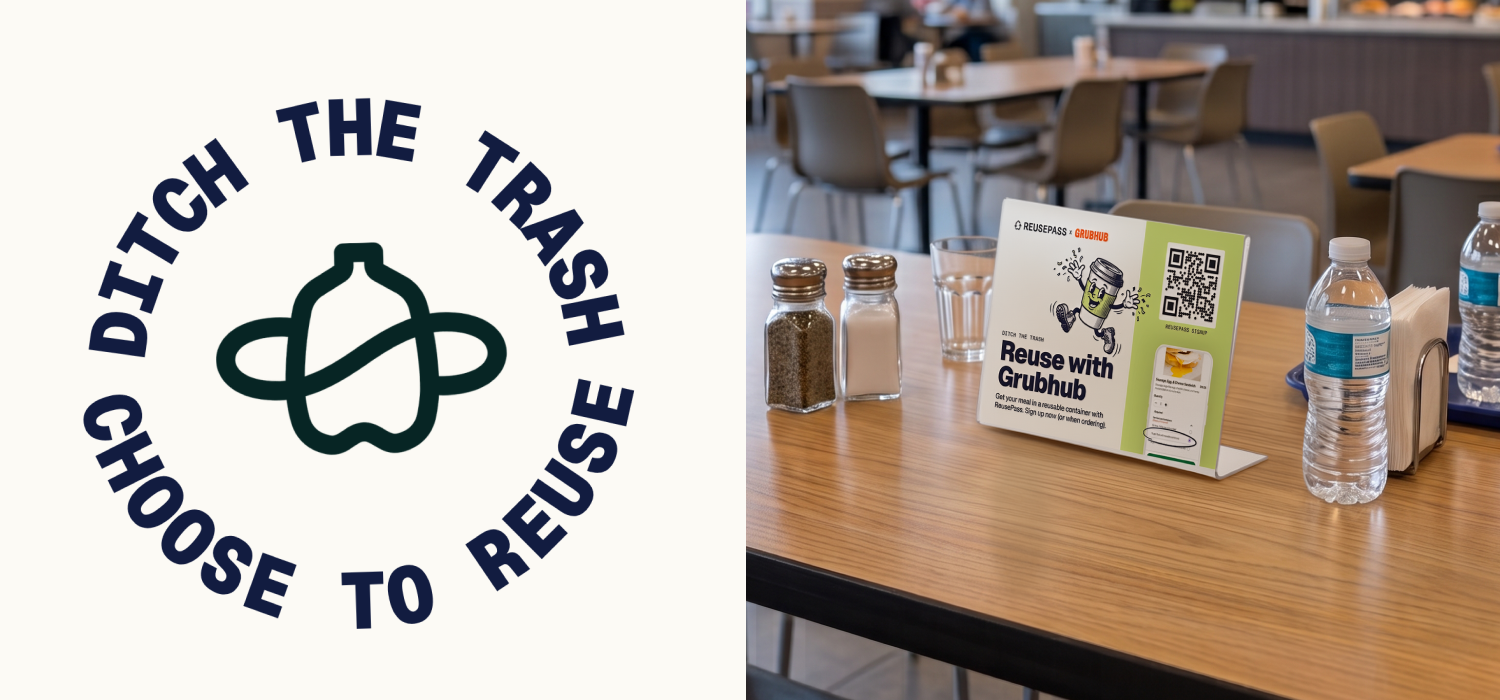
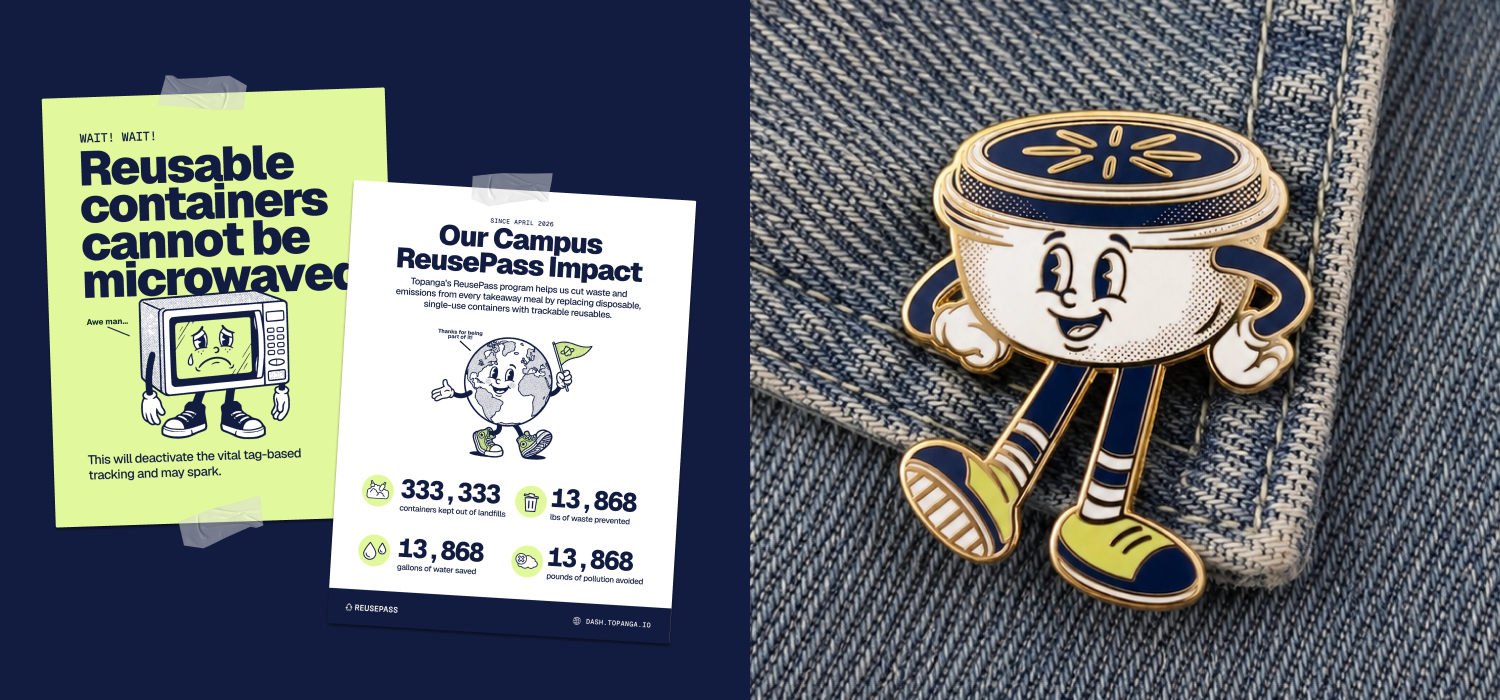
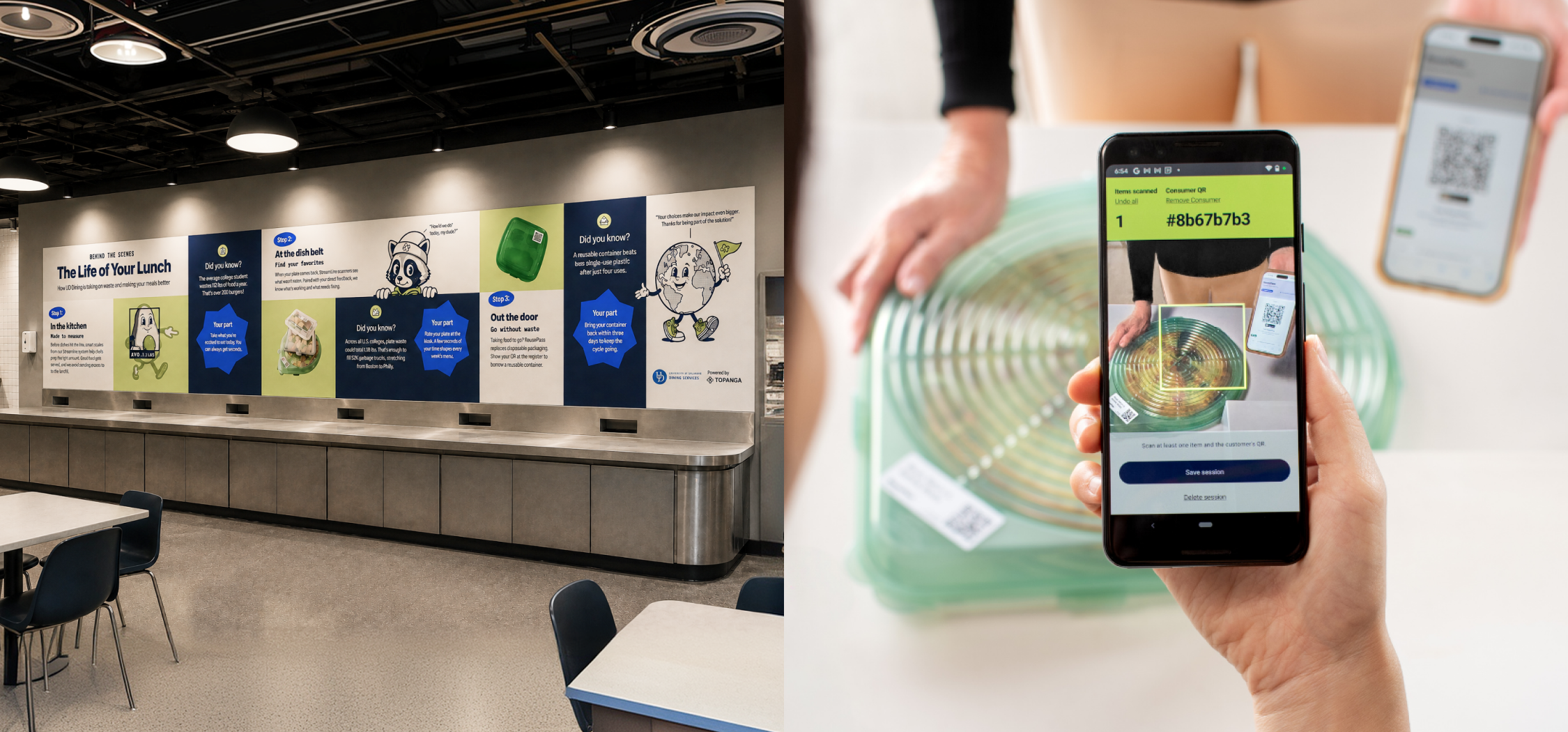
Student-facing. Flyers, bin panels, dining hall signage.
Sign up, return it here, don't microwave it, here's what we saved this year. Most of it is instruction. A character set carries all of it, so a warning and a thank you read as the same brand. Flyers hold a subhead and a caption. Bin panels get read from across a room, so those are a verb and an arrow. Everything ships as a template campus staff edit themselves.
Students read ReusePass at the counter, while deciding what to eat. Four message types share that space.
O2 / B2BStreamLine
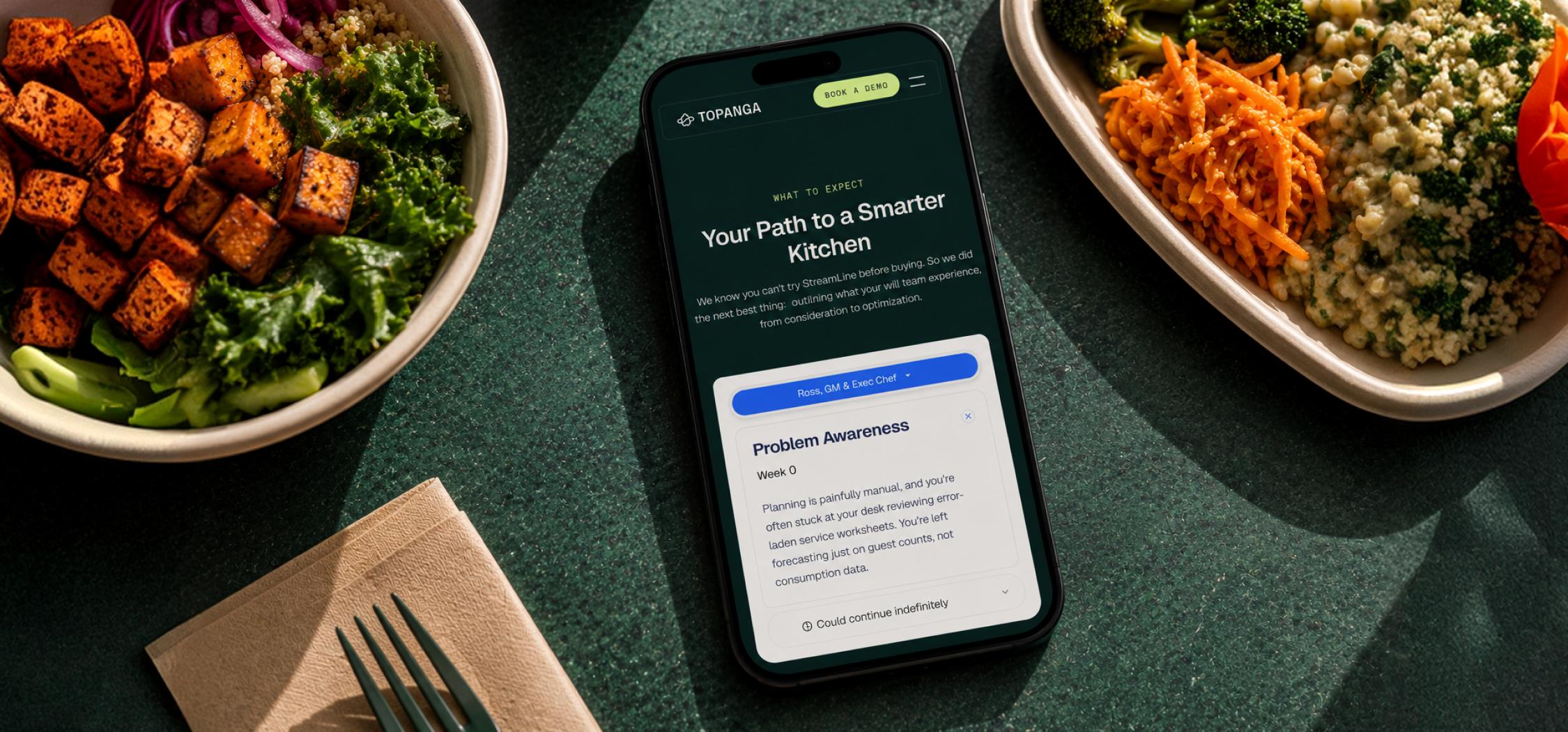
Buyer-facing. Interactive implementation page and sales deck.
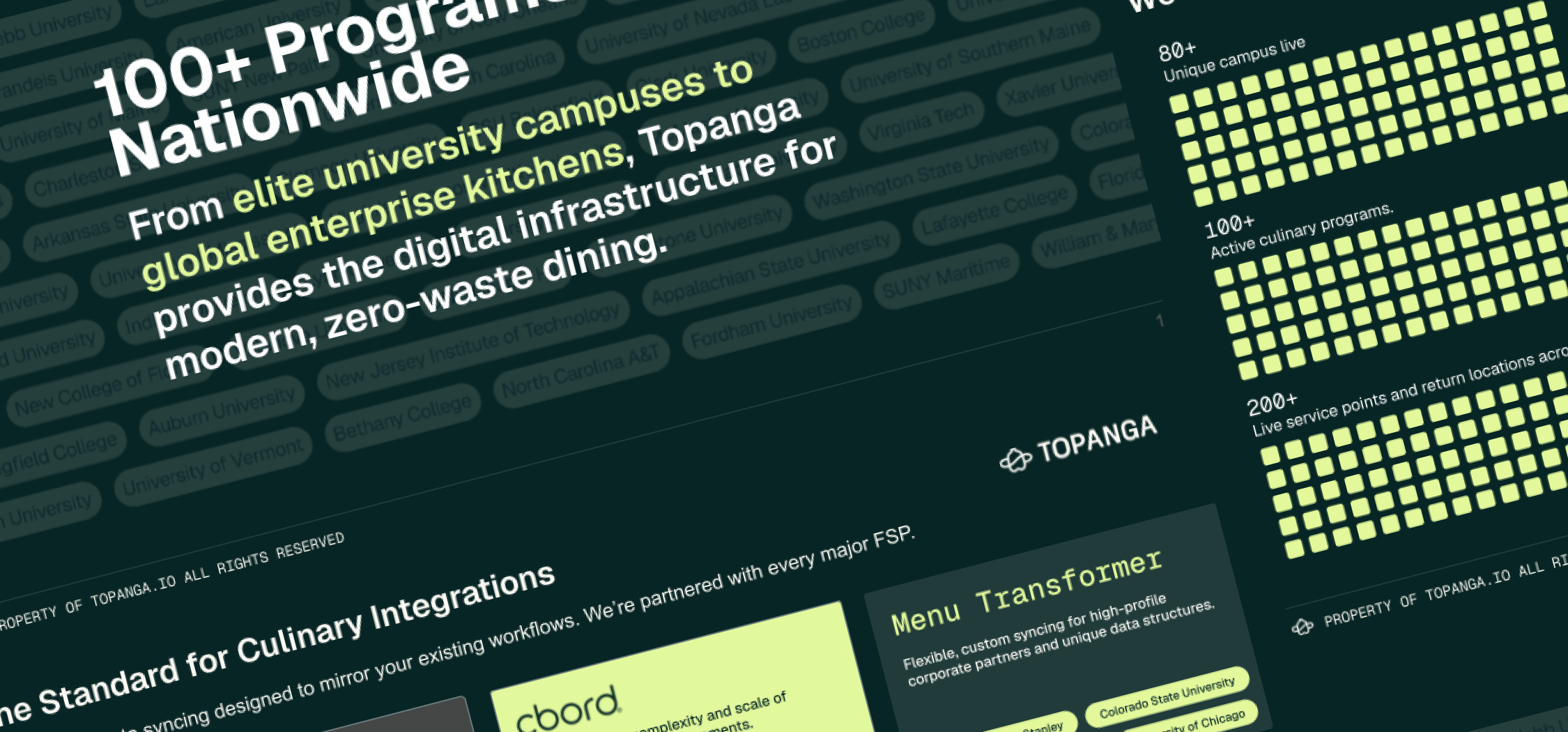
StreamLine gets bought by a committee.
A dining director evaluates cost. An exec chef decides if the kitchen can pull it off. A sustainability lead cares about targets. A line cook wants to know what lands on their shift. All four want to know what happens in week six, and all four want to know something different about it. So you pick who you are and the timeline reframes around you. Every card carries a time cost. 45 minutes for the demo, 30 to review the ROI report, 15 on launch day. The hesitation was about effort, so effort became the most visible thing on the page.